Workshop mit Prof. Dr. Tetyana Kozlova, Zaporizhzhia National University
Meaning in the Mind: From Words to Communication
| Datum: | 22.10.2026, 10:15 - 11:45 Uhr |
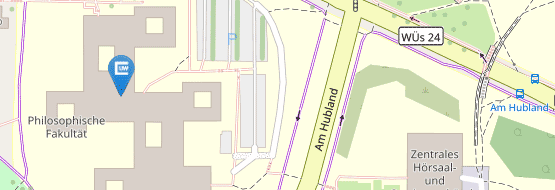
| Ort: | Hubland Süd, Geb. PH1 (Philosophiegebäude), 6.E.8 |
| Veranstalter: | Lehrstuhl für Slavistik |
| Vortragende: | Tetyana Kozlova, D.Sc., Prof. - Zaporizhzhia National University |
The workshop explores word meaning as a dynamic process shaped by linguistic structure, cognitive mechanisms, neurolinguistic processes, and communicative context. It moves from traditional approaches to lexical meaning towards meaning construction, considering the mental lexicon, semantic activation, lexical access, and context-dependent interpretation. Particular attention is given to cognitive models underlying semantic development, metaphor, metonymy, and phraseological meaning as manifestations of culturally grounded conceptualization.
Students will learn learn cognitive-semantic conceptual analysis as a methodology used in both linguistic research and various spheres of applied linguistics. They will explore how categorisation and conceptual mapping shape lexical meaning, developing an essential philological skill for explaining rather than merely describing linguistic data. Students will also learn to apply conceptual analysis to lexical data, with practical demonstrations of how conceptual categorisation and semantic relations can be used in the language of argumentation and neuro-linguistic programming.
- Language Semantics and Lexical Meaning
Main question: How does lexical meaning change and how can we identify these changes?
Students will learn about factors, mechanisms and results of lexical meaning development. Through practical analysis of selected words and use of componential analysis they will identify ways of meaning development and types of changes in the word semantic structure.
- From Lexical Meaning to Conceptual Structure
Main questions: Is lexical meaning identical to the knowledge represented by a word? What happens when a word is activated in the mind?
Students will learn about limitations of purely structural approaches to lexical meaning and advantages of cognitive-semantic approach to meaning, understand relationship between lexical meaning and conceptual knowledge (categorisation, conceptual mapping). Through practical tasks they will understand how the mind selects the relevant meaning and what cognitive mechanisms underlie metaphor; metonymy; phraseological meaning.
- Applied Dimension: Where Can Cognitive-Semantic Analysis Be Used?
Through practical tasks students will see how the methodology can be applied to:
- linguistic research (explaining semantic development and conceptualization);
- discourse and argumentation (meaning construction for persuasion);
- translation (revealing culturally and conceptually specific meanings);
- language teaching (explaining polysemy, metaphor and phraseology);
- NLP (neuro-linguistic programming).
(2 academic hours)