Gastvortrag von Prof. Dr. Tetyana Kozlova, Zaporizhzhia National University
Motivated Meaning-Making: Iconicity Across Communicative Modes
| Datum: | 19.10.2026, 18:00 - 20:00 Uhr |
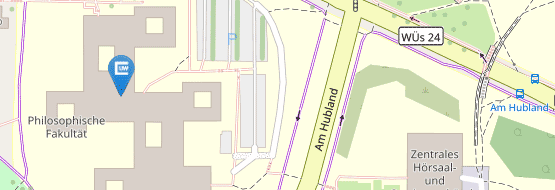
| Ort: | Hubland Süd, Geb. Z6 (Zentrales Hörsaal- u. Seminargebäude), 1.004 |
| Veranstalter: | Lehrstuhl für Slavistik |
| Vortragende: | Tetyana Kozlova, D.Sc., Prof. - Zaporizhzhia National University |
The presentation discusses iconicity as a principle of motivated meaning-making across different communicative modes and historical periods. It addresses the following research question: How do different principles of iconicity motivate form–meaning correspondences across communicative modes, and to what extent do these principles demonstrate cross-temporal stability?
Attention is given to four principles of iconicity: qualitative iconicity, manifested in sound symbolism and onomatopoeia; quantitative iconicity, based on the correspondence between the amount or repetition of formal material and the amount, repetition, or intensity of meaning; structural (diagrammatic) iconicity of order, whereby relations between formal elements correspond to conceptual or experiential relations; and reversive iconicity, a principle identified and theoretically developed by the author, whereby reversal or reconfiguration of formal relations corresponds to reversal, restructuring, or indirect encoding of meaning.
The focus is on the realization of these principles across communicative modes, including verbal language, everyday gestural communication, children’s games and reduplication, poetry, creolized and multimodal texts, and advertising. The discussion also deals with the panchronic dimension of iconicity, drawing on evidence from ancient and modern languages to explore the relationship between historically variable forms and potentially stable principles of iconic motivation.
It is argued that iconicity extends beyond resemblance between individual signs and referents, functioning as a multidimensional principle that organizes motivated correspondences between form, meaning, conceptual structure, experience, and communicative action across semiotic modes.