
Review of Irish Studies in Europe "The Animal in Ireland, Real and Imagined"
03.12.2025New publication, co-edited by Kirsten Sandrock.
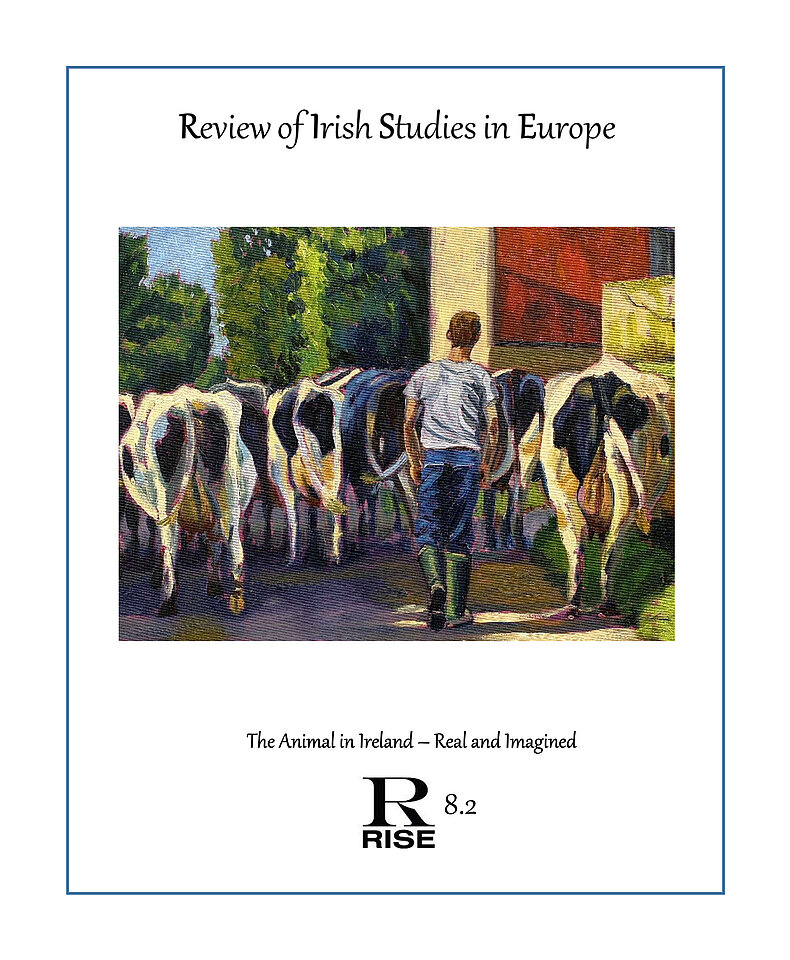
From St Ciarán’s famous cow whose hide provided the vellum for one of the oldest surviving manuscripts in Irish literature, The Book of the Dun Cow (c.1100), which featured the first printed record of the Cattle Raid of Cooley, central epic of the heroic Ulster Cycle, to nineteenth-century cartoons of simian Irish, to John Connell’s 2018 best-selling memoir, The Cow Book, Irish cultural identity has been closely associated with the animal. In the British imperial imaginary, this association justified representing the Irish as less-than-human, not fully evolved, rationalising centuries of occupation and exploitation, a complicating factor in reclaiming and honouring Ireland’s traditional regard for the nonhuman. This themed issue opens with two contributions that consider Irish-language texts and the role of the nonhuman animal, from mythological tales to the early twentieth century, from the legends that feature in the Fionn cycle, to fiction and poetry by Seán Ó Ríordáin, Patrick Pearse and Pádraic Ó Conaire. Irish literature written in English that represents encounters between human and nonhuman animals—both real and imagined—provides the focus for the rest of the essays here, from the late-nineteenth fiction of Sheridan LeFanu to the twenty-first-century prose of Irish women writers Tana French, Jan Carson and Sheila Armstrong.